
Custom Index Tabs & Dividers
Showing all 4 results
-

Custom Printed Index Tab Set
Quoted per project · Made to order Request a quote for pricingFirm pricing within 1 business day Request a quote -
Copier Tabs
Quoted per project · Made to order Request a quote for pricingFirm pricing within 1 business day Request a quote -
Blank Index Tab Stock
Quoted per project · Made to order Request a quote for pricingFirm pricing within 1 business day Request a quote -
Custom Printed Binder Dividers
Quoted per project · Made to order Request a quote for pricingFirm pricing within 1 business day Request a quote
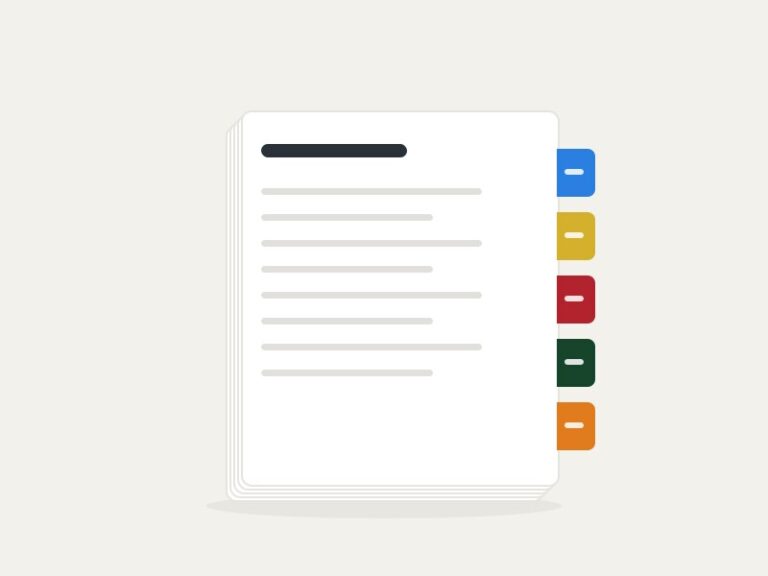


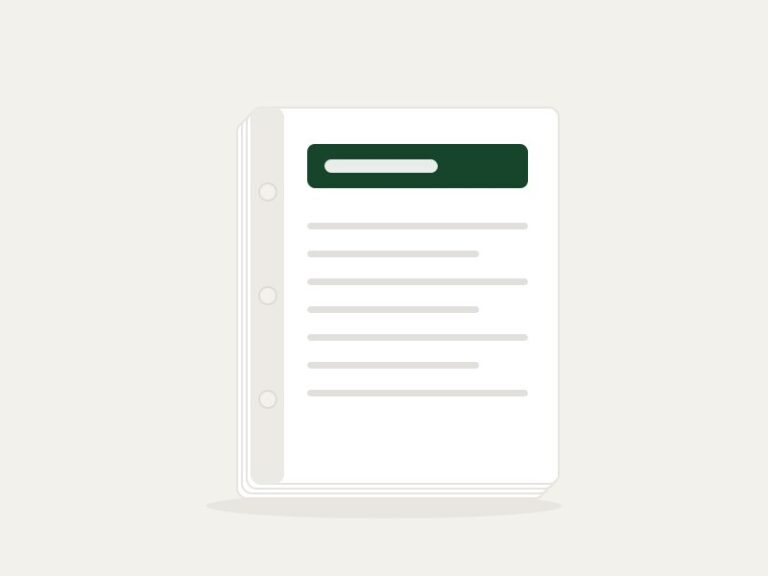
Custom printed index tabs, dividers and copier tabs — collated into finished sets and matched to the binder they go in.
An index tab set is what turns a stack of paper into a document somebody can actually use. In a COR audit it is the difference between an auditor finding an element and an auditor hunting for it, and that distinction has a score attached to it. We print index tabs, dividers and copier tabs in our Canadian plant and collate them into finished sets, in any bank configuration, matched to the binder they ship inside.
How tab widths are calculated. This is the number people get wrong, and getting it wrong means a set that does not line up. On a letter-size tab sheet — 9" x 11", wider than a standard 8 1/2" page so the tabs project past it — the tab positions are laid out across a 10" span, so the width of each tab is 10" divided by the number of positions in the bank. A 5-bank set gives 2" tabs. A 4-bank gives 2 1/2". An 8-bank gives 1 1/4", a 10-bank gives exactly 1", and a 12-bank gives about 13/16". The more sections you cram in, the less room there is for the section name, which is why a long-titled 12-bank set usually reads better set in two lines than in one squeezed line.
Stock and reinforcement. Economy sets run on 90 lb index; 110 lb index is the heavy-duty stock, and it is what we recommend for anything referenced weekly or handled with gloves on. Mylar reinforcement is a thin BoPET polyester film bonded to the tab tip, the binding edge, or both — the tip is what stops a tab from fraying where fingers grab it, and the binding edge is what stops the punch holes from tearing out. On a safety manual that gets flipped through on a tailgate every morning, both are worth the small premium.
Specify the number of positions in the bank, single- or double-sided printing, whether the tab is bled in your corporate colour, and whether you want the set collated in order and inserted into the binder before it ships. We print the tabs and the binder in the same plant, so the colours match rather than nearly matching.
Bank configuration and tab width
- 3-bank
- 3 1/3" tabs — broad sections, wide titles
- 4-bank
- 2 1/2" tabs
- 5-bank
- 2" tabs — the most common configuration
- 6-bank
- 1 2/3" tabs
- 8-bank
- 1 1/4" tabs
- 10-bank
- 1" tabs
- 12-bank
- About 13/16" tabs — plan on two lines of type
- The rule
- Tab width = 10" divided by the number of positions in the bank, on a 9" x 11" letter tab sheet
Stock, print and finishing
- Stocks
- 90 lb index (economy) and 110 lb index (heavy duty); coated and uncoated
- Reinforcement
- Mylar (BoPET) film on the tab tip, the binding edge, or both
- One to four screened colours or full-colour digital, one or both sides, tab and body
- Bleed
- Solid colour bleed across the tab or the full divider
- Punching
- 3-hole standard; 5-hole, 7-hole and custom drilling to match your binder
- Sets
- Collated in order, shrink-wrapped or inserted into the binder before shipping
- Also
- Copier tabs for high-volume in-house duplicating, and blank stock if you print in house
Index Tabs & Dividers — answered.
How wide is each tab in a set?
Divide 10" by the number of positions in the bank. A letter-size tab sheet is 9" x 11" — wider than the 8 1/2" page it sits behind, so the tabs project — and the tab positions are laid out across a 10" span of that width. So a 5-bank set has 2" tabs, a 4-bank has 2 1/2", an 8-bank has 1 1/4" and a 10-bank has exactly 1". If your section names are long, choose fewer positions or plan on two lines of type: a 1" tab holds far less text than people expect.
What is a bank of tabs?
A bank is one complete set of tab positions running from the top of the page to the bottom, each in a different vertical position so that no two tabs overlap when the set is stacked. A 5-bank set has five tabs and then the sixth tab returns to the top position. Tell us how many sections you need and we will lay out the bank — and if your section count is not a round number, we will tell you whether it reads better as a short bank repeated or a longer bank with blanks.
What stock are your index tabs printed on?
Two choices. 90 lb index is our economy stock and is fine for a set that gets referenced occasionally. 110 lb index is the heavy-duty stock, noticeably stiffer, and it is what we recommend for safety manuals, price books and anything else that gets handled daily or with gloves on. Both take screened and full-colour digital printing on one or both sides.
Do you reinforce the tab edges?
On request, and it is worth it. Mylar reinforcement is a clear polyester (BoPET) film bonded over the tab tip, the binding edge or both. The tip reinforcement is what keeps the tab from fraying where fingers grab it; the binding-edge reinforcement is what keeps the punch holes from tearing out of the sheet. On a manual that is opened every day, reinforcement roughly doubles the working life of the set for a small fraction of its cost.
Can you print tabs to match our binder?
Yes — the tabs and the binder come out of the same plant, on the same equipment, so the colours actually match rather than nearly matching. We will collate the set in order, punch it to your binder's hole pattern, and insert it before shipping if you want the whole package to arrive assembled.
What is a copier tab?
A copier tab is a tab sheet built to run through a photocopier or digital press, so you can print your own body content onto it in house while the tab itself is pre-cut and, if you want, pre-printed. It is the right answer when your section content changes often but your section names do not — you reprint the pages, not the set.
Question not answered here? Talk to our Canadian plant — 780.466.9973, Monday to Friday, 8:00 to 4:30.