
- The minimum order for this product is 50 units.
Showing 13–19 of 19 results
-
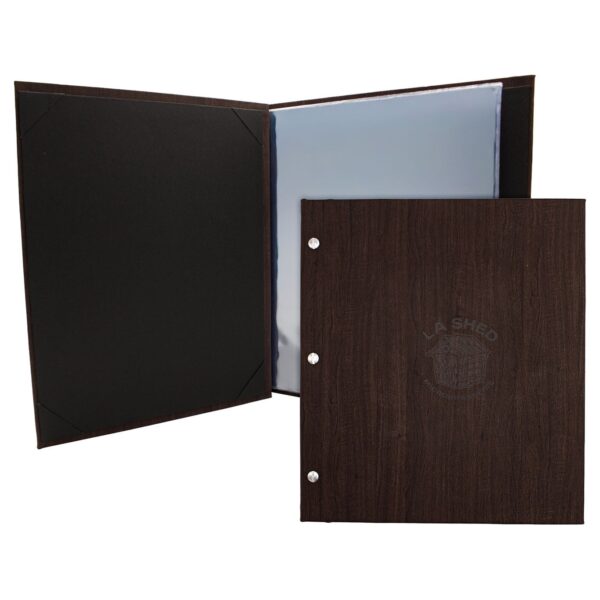
Dark Wood-Grain Menu Cover with Screw Posts
+6MOQ 25 · Made to order Request a quote for pricingFirm pricing within 1 business day Request a quote -

Rectangular Placemat in Leatherette Menu Cover
+17MOQ 50 · Made to order As low as $19.81(C)at 250+ units Add to cart -
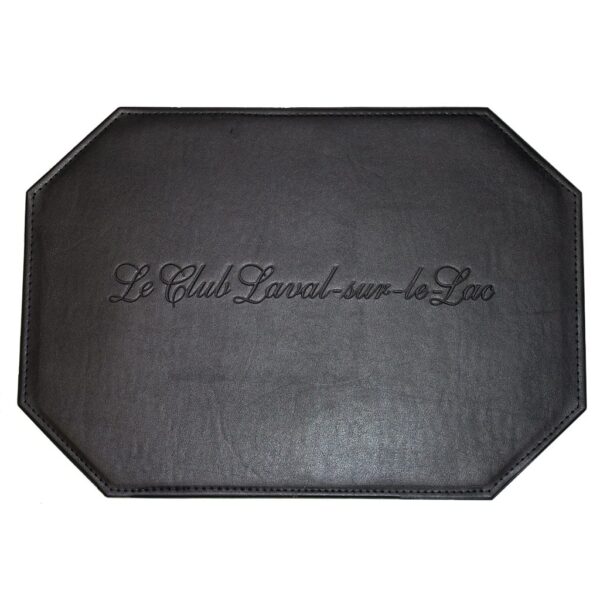
Hexagonal Leatherette Placemat Menu Cover
+17MOQ 50 · Made to order As low as $20.35(C)at 250+ units Add to cart -
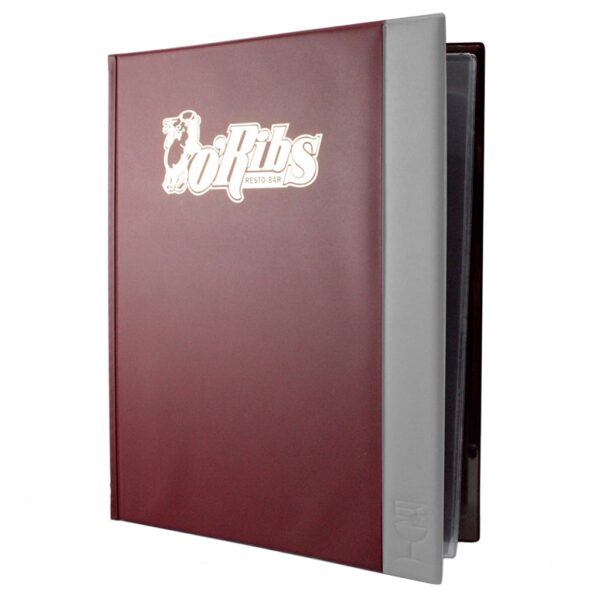
Menu Cover Letter Size
+6MOQ 25 · Made to order As low as $16.69(C)at 250+ units Add to cart -
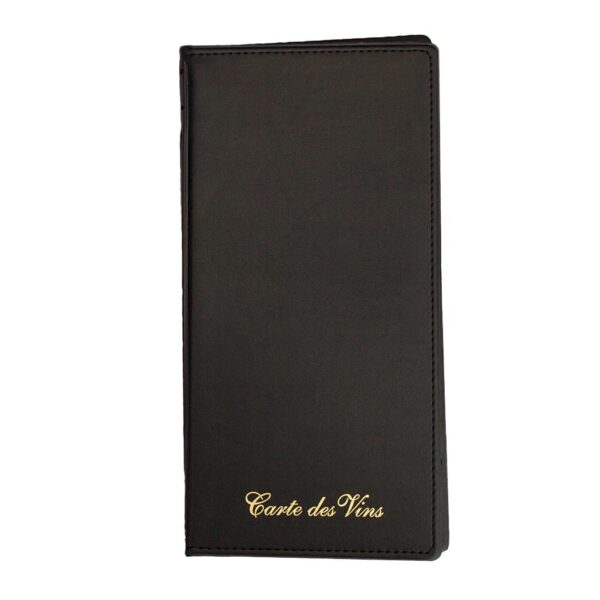
Wine Card 6 1/4″ x 13″ Menu Cover
+6MOQ 25 · Made to order As low as $25.02(C)at 100+ units Add to cart -
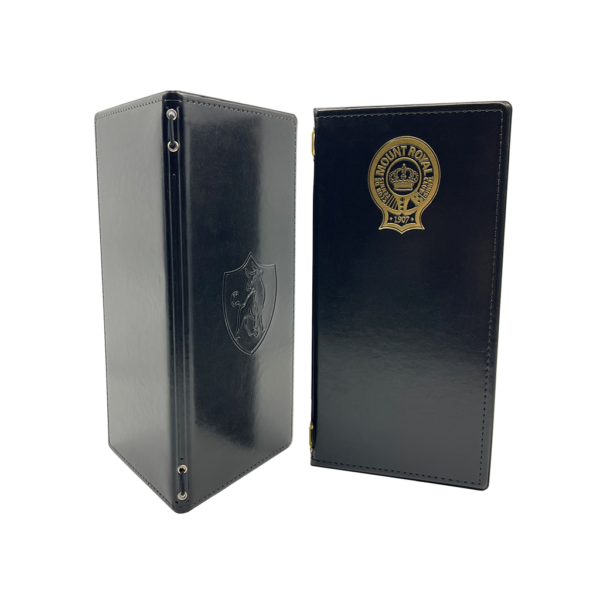
Wine Card 4 3/4″ x 12″ Menu Cover
+6MOQ 25 · Made to order As low as $22.61(C)at 100+ units Add to cart -
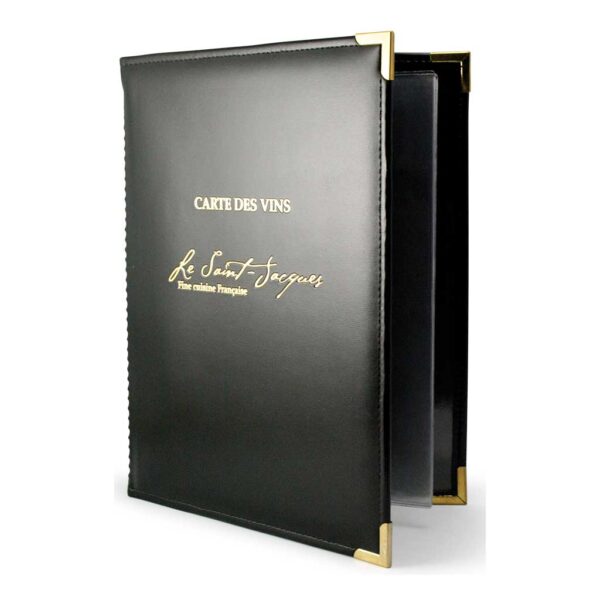
Deluxe Menu Cover
+6MOQ 25 · Made to order As low as $33.36(C)at 250+ units Add to cart
Menu covers built to be handled thousands of times — sewn, welded or screw-post, in restaurant-grade vinyl and leatherette.
A menu cover fails at the corners and along the spine, which is exactly where a cheap one is thinnest. Ours are built in Canada from restaurant-grade vinyls and leatherettes, with reinforced corners and your choice of binding, so a cover outlasts several menu revisions instead of being thrown out with them.
Choosing the binding is choosing how often you reprint. A sewn or welded cover with clear insert pockets is the cheapest way to change a menu — you slide new pages in and the cover never leaves the floor. A screw-post or ring binding suits a longer menu or a wine list that grows, because you add pages rather than replacing a spread. A single-panel or tent format is for specials and table cards that change daily and are meant to be disposable behind a permanent frame. Tell us how often your menu actually changes and we will point you at the format that costs least over a year, not least on the invoice.
Materials that survive a dining room. Wipe-clean vinyl in gloss, matte and textured finishes for anything that shares a table with food; leatherette and bonded leather where the cover is doing presentation work in a fine-dining room; and heavy-duty sealed constructions for patios, pubs and anywhere covers get stacked wet. Clear non-glare overlay pockets protect printed inserts from grease and condensation without the reflection that makes a laminated menu hard to read under downlights.
Foil stamp or deboss the restaurant name and crest on the front, match the material across menus, wine lists, check presenters, table tents and room-service compendiums, and specify insert sizes that match the paper stock you already print on. A hotel group can standardize one leatherette and one foil die across every property and every piece.
Formats and binding
- Insert pocket
- Clear non-glare pockets — slide new pages in, keep the cover
- Sewn
- Stitched edge, reinforced corners — the traditional restaurant construction
- Welded
- Radio-frequency welded seams, no thread — best for wipe-down and wet environments
- Screw post
- Add and remove pages; suits wine lists and long menus
- Ring and cord
- Rings for frequent page changes, decorative cord for a lighter look
- Panels
- Single, bi-fold, tri-fold, and multi-page with a stitched or welded spine
- Related pieces
- Wine lists, check presenters, table tents, room-service compendiums, drink and dessert cards
Materials and decoration
- Vinyl
- Restaurant-grade wipe-clean vinyl, gloss, matte and textured
- Leatherette
- Including Mission-grade and premium embossed finishes for fine dining
- Leather
- Bonded and topgrain where the cover is the presentation
- Overlay
- Clear non-glare overlay to protect printed inserts without glare under downlights
- Decoration
- Hot foil stamping, blind debossing, silk screening, full-colour digital print
- Insert size
- Built to your printed insert — 8 1/2" x 11" and 8 1/2" x 14" are the common ones
Menu Covers — answered.
What size should a menu cover be?
Build the cover around the insert you are already printing, not the other way around. 8 1/2" x 11" is the most common because it is what most restaurants lay out and print in house; 8 1/2" x 14" gives a longer page for a full dinner menu; 5 1/2" x 8 1/2" suits drink, dessert and wine-by-the-glass cards. The cover itself runs slightly larger than the insert so the paper is protected at the edges. Send us your insert dimensions and we will confirm the finished cover size on the proof.
Which binding is best if our menu changes often?
Clear insert pockets, without question. You reprint a sheet of paper and slide it in; the cover, which is the expensive part, never leaves the floor. Screw-post binding is the better answer when the menu grows rather than changes — a wine list that gains pages every season — because you can add a leaf without reprinting the spread. Ring binding sits between the two. If your menu changes weekly, insert pockets will cost you a fraction of what any bound format will over a year.
Can menu covers be wiped down?
Vinyl and welded constructions, yes — that is what they are for, and they will take a damp cloth and a food-safe cleaner many thousands of times. Leatherette tolerates a wipe but not saturation. Where covers are handled constantly or go outdoors on a patio, ask for welded seams rather than stitched: there is no thread to wick moisture and no needle holes along the edge.
Do you foil stamp the restaurant name?
Yes — foil stamping is the traditional finish for a menu cover and one of our four in-house decoration methods. Gold and silver are the common choices, and we also stamp coloured and matte foils, or blind deboss the mark into the material for something quieter. The same die then works across your check presenters, wine lists and compendiums so the whole room matches.
Can you match covers across a hotel group or several locations?
That is a large part of what we do. One material, one foil die and one specification applied across menus, wine lists, check presenters, table tents and compendiums, then produced per property with different imprints where each location needs its own name. We hold the die, so reorders years later still match the originals.
Question not answered here? Talk to our Canadian plant — 780.466.9973, Monday to Friday, 8:00 to 4:30.