
Custom Safety Signs
- The minimum order for this product is 100 units.
Showing the single result
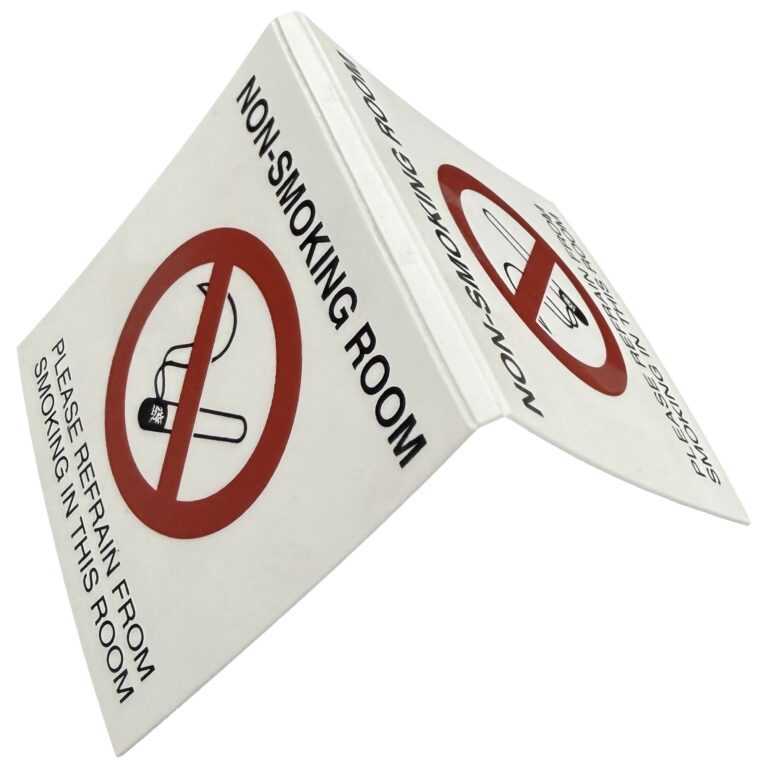
Custom safety signage printed on durable stock — site notices, hazard signs, pipe markers, tent signs and room identification.
Site entrance notices, hazard and warning signs, muster point and emergency equipment signage, pipe and valve marking, room and door identification, tent signs and floor-standing notices — printed in full colour on durable vinyl and rigid stocks, one or both sides, laid out to the ANSI Z535 and CSA signal-word conventions your program is built around.
The signal word system. Z535 is a format standard, and using it correctly is mostly about matching the word to the severity rather than picking a colour you like. Danger, in red, is reserved for a hazard that will cause death or serious injury if not avoided — it is over-used, and over-using it is what teaches crews to stop reading signs. Warning, in orange, is for a hazard that could. Caution, in yellow, is for one that could cause minor or moderate injury. Notice, in blue, carries information and property-damage messages and is not a personal-injury signal word at all. Green marks safety equipment and emergency egress. We lay out the signal word panel, the safety alert symbol and the message panel to spec, and e-proof it for your safety officer to sign.
Pipe marking. ANSI/ASME A13.1 sets the letter height and the length of the colour field by the outside diameter of the pipe or its covering — the bigger the pipe, the taller the legend has to be, because it is read from further away. The letter-height progression is in the table below. The colour scheme changed in the 2023 edition of the standard, and we deliberately do not publish a colour chart here: send us the edition your facility is built to and we will set the markers to it rather than to a version you may have moved on from.
One look across every surface. Because we print the signs, the decals and the tags on the same equipment in the same plant, a site can standardize completely — the same wording, the same colours, the same logo on the wall sign at the gate, the decal on the equipment, the tag on the valve and the cover of the binder in the trailer. That consistency is worth more than most people credit: crews stop having to interpret three versions of the same instruction.
ANSI/ASME A13.1 pipe marker letter height
- 3/4" to 1 1/4" pipe
- 1/2" letters
- 1 1/2" to 2" pipe
- 3/4" letters
- 2 1/2" to 6" pipe
- 1 1/4" letters
- 8" to 10" pipe
- 2 1/2" letters
- Over 10" pipe
- 3 1/2" letters
- Measured on
- The outside diameter of the pipe including any covering or insulation, not the nominal bore
Substrates and finishing
- Vinyl
- Printed and laminated adhesive vinyl for application to walls, doors, glass and equipment
- Rigid
- 4 mm coroplast, styrene, PVC and polymetal (aluminium composite) for freestanding and mounted signs
- Reflective
- Engineer grade (ASTM D4956 Type I) and high-intensity prismatic (Type IV) where a sign must read at night
- Full colour, one or both sides; UV and abrasion-resistant overlaminate standard on outdoor work
- Formats
- Wall and door signs, tent and A-frame signs, post-mounted site notices, hanging and projecting signs
- Finishing
- Radius corners, drilled mounting holes, grommets, and adhesive or mechanical mounting
Safety Signs — answered.
What is the difference between Danger, Warning and Caution on a safety sign?
They are severity levels, not synonyms, and ANSI Z535 defines them precisely. Danger, white on red, indicates a hazardous situation that will result in death or serious injury if it is not avoided — it should be rare on any site. Warning, black on orange, indicates a situation that could result in death or serious injury. Caution, black on yellow, indicates one that could result in minor or moderate injury. Notice, white on blue, is not a personal-injury signal word at all: it carries information and property-damage messages. Getting these right matters practically, because a site that labels everything Danger trains its crews to ignore the word.
What size lettering does a pipe marker need?
ANSI/ASME A13.1 scales the legend to the outside diameter of the pipe including its covering. Pipe from 3/4" to 1 1/4" takes 1/2" letters; 1 1/2" to 2" takes 3/4"; 2 1/2" to 6" takes 1 1/4"; 8" to 10" takes 2 1/2"; and anything over 10" takes 3 1/2" letters. Measure the outside of the insulation, not the nominal bore — that is the most common error we see on drawings sent to us.
Do you print signs to CSA and ANSI Z535 format?
Yes, every week. We set the signal word panel, the safety alert symbol, the message panel and the pictogram to the format, in the specified colours, and we proof it back to you before printing so your safety officer signs off on the layout rather than on a description of it. Compliance is ultimately a property of your program rather than of any blank sign, so tell us which standard and which edition your program is written to and we will build to that.
Can safety signs be printed for outdoor Alberta conditions?
Yes. Outdoor signage gets a UV and abrasion-resistant overlaminate as standard, and we print on substrates chosen for the mounting: adhesive vinyl on an existing surface, 4 mm coroplast for temporary site notices, and polymetal or PVC where a sign is post-mounted and has to stay flat through freeze-thaw cycles. Where a sign has to read at night, we print on engineer grade or high-intensity prismatic reflective stock.
Can you match our signs, decals and tags?
That is the advantage of everything coming out of one plant. The same artwork, colours and wording go onto the wall sign, the equipment decal, the valve tag and the binder cover, printed on the same equipment to the same colour standard. Send us one approved layout and we will apply it across every surface on the site, then hold the files so a reorder in three years still matches.
Question not answered here? Talk to our Canadian plant — 780.466.9973, Monday to Friday, 8:00 to 4:30.